Jayco Jay Feather Air 18MBH vs Winnebago Micro Minnie 1821FB
2026 Travel Trailer comparison · side-by-side specs, verdict, and who each is best for.
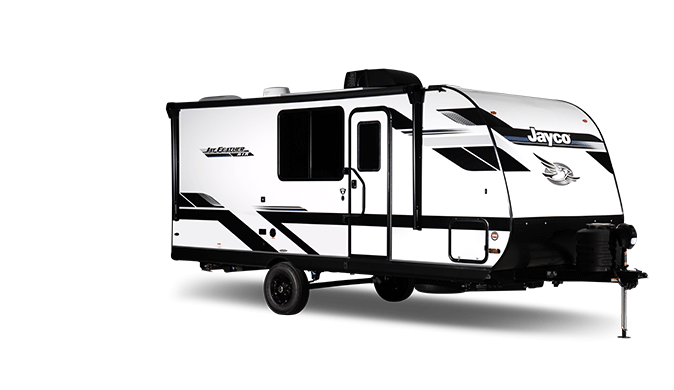 Photo unavailable
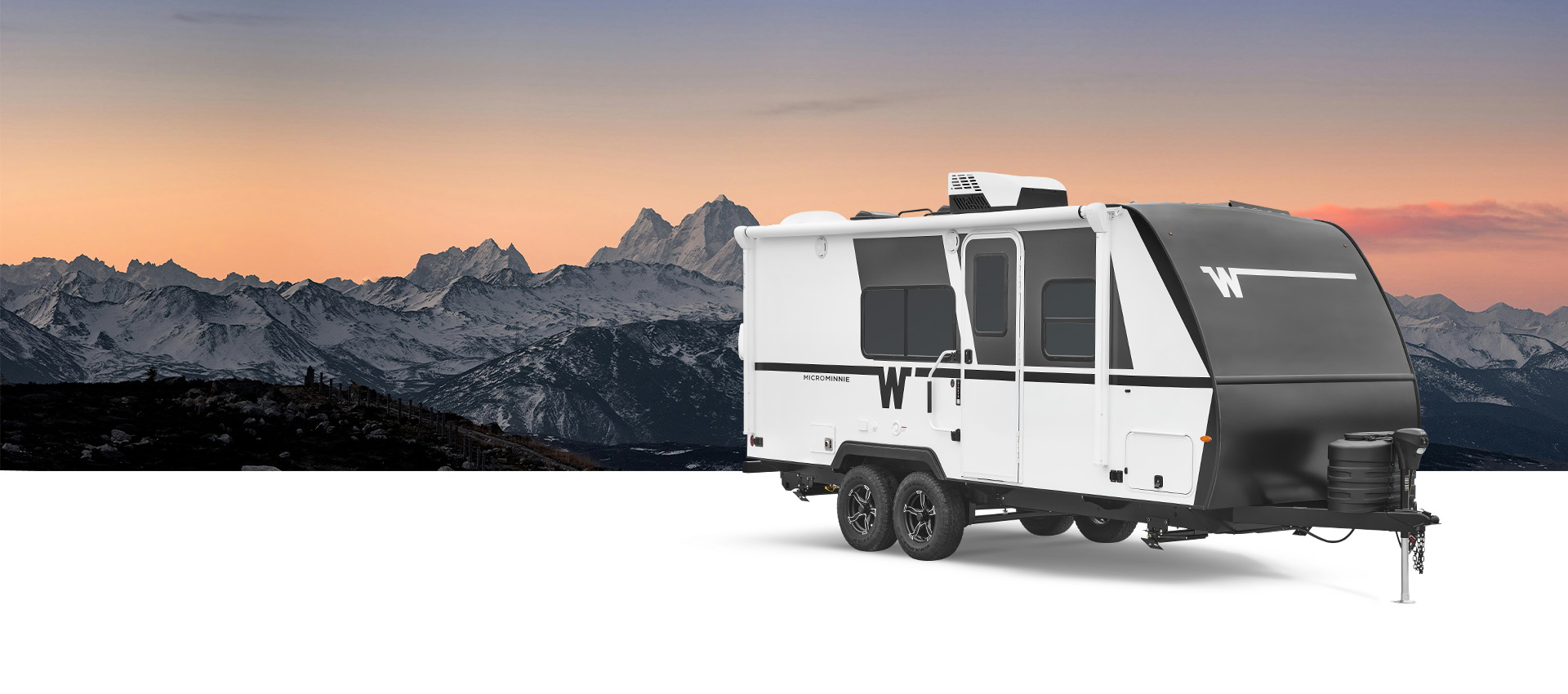 Photo unavailable
Quick verdict
Same money, very different missions. Jayco Jay Feather Air 18MBH lists at $38,085 with a bunkhouse floor plan, a single slide, and the 96-inch full-width body. The Winnebago Micro Minnie 1821FB is $304 cheaper at $37,781 but loses the bunks, drops to a 84-inch narrow body, and skips the slide entirely. So if your decision involves kids sleeping anywhere besides a dinette conversion, the Jayco is the only one of the two that solves the problem out of the box.
Catalog equipment entries do not verify installation, provenance or operation. The Micro Minnie 1821FB carries 31/25/25/9.5 across those four tanks. That's almost 2x fresh, more than 4x LP, on the Jayco. The penalty is weight — 4,395 lbs dry vs 4,086 lbs — and the wider 96-inch beam.
The Jay Feather Air has listed bunks; the Micro Minnie has a narrower listed body and no bunks. Confirm overall dimensions and site restrictions before travel.
Side-by-side specs
| Jayco Jay Feather Air 18MBH | Winnebago Micro Minnie 1821FB | |
|---|---|---|
| MSRP | $38,085 | $37,781 |
| Length | 23' | 21'3" |
| Dry weight | 4,395 lbs | 4,086 lbs |
| GVWR | 5,700 lbs | 5,500 lbs |
| Sleeps | 4 | 3 |
| Slides | 1 | 0 |
| Fresh tank | 55 gal | 31 gal |
| Grey tank | 38 gal | 25 gal |
| Black tank | 38 gal | 25 gal |
| LP | 40 gal | 9.5 gal |
| Solar | 200W | — |
| Inverter | — | — |
| Generator | — | — |
| Bath | full | full |
| Bed | bunks | queen |
| 4-season | Yes | Yes |
| Off-road | No | No |
| Outdoor kitchen | No | No |
| Washer/dryer | none | none |
| Residential fridge | Yes | No |
Where Jayco Jay Feather Air 18MBH wins
- True bunkhouse layout with dedicated kids' beds — the Micro Minnie has no bunks at any trim
- Slide-out adds usable floor space inside; the Micro Minnie 1821FB is a no-slide unit
- 55 gal fresh + 40 gal LP vs 31 gal + 9.5 gal — boondocking ratios are not close
- Catalog equipment entries do not verify installation, provenance or operation.
- Catalog flags do not independently verify winter performance.
Where Winnebago Micro Minnie 1821FB wins
- Listed body width is 84 in versus 96 in; confirm overall dimensions and route restrictions with the manufacturer and destination.
- Listed dry weight is 309 lb lower (4,086 vs 4,395). Dry weight alone does not establish towing suitability.
- 1.75 ft shorter at 21.25 ft, confirm campsite dimensions and restrictions with the destination
- 30-amp shore service confirmed; lower electrical demand suits small-RV park hookups
- $304 cheaper sticker if you genuinely don't need the bunks
Pick the Jayco Jay Feather Air 18MBH if…
Compare the listed floor plan, dimensions, tank capacities and equipment with your needs. For towing, verify your specific vehicle’s ratings and the trailer’s loaded weight, GVWR and hitch loads with the manufacturers; listed dry weight and vehicle class alone do not establish compatibility.
Pick the Winnebago Micro Minnie 1821FB if…
Compare the listed floor plan, dimensions, tank capacities and equipment with your needs. For towing, verify your specific vehicle’s ratings and the trailer’s loaded weight, GVWR and hitch loads with the manufacturers; listed dry weight and vehicle class alone do not establish compatibility.
Frequently asked
Does the Micro Minnie 1821FB have bunks?
No. The 1821FB is a front-queen, no-bunkhouse floor plan. If you need bunks, the Jay Feather Air 18MBH is the only one of the two with them built in.
Which has more usable LP propane?
The Jayco — 40 gal vs 9.5 gal on the Winnebago. That's a meaningful difference for furnace runtime in cold weather.
Can a midsize SUV tow either one?
This comparison cannot establish whether a particular SUV can tow either trailer. Check your vehicle’s rated towing capacity, payload, hitch limits and manufacturer guidance against the trailer’s loaded weight and GVWR. Dry weight or a tow rating alone is not enough; account for passengers, cargo and hitch loads.