Airstream Basecamp 20X vs Black Series HQ17
2026 vs 2027 Travel Trailer comparison · side-by-side specs, verdict, and who each is best for.
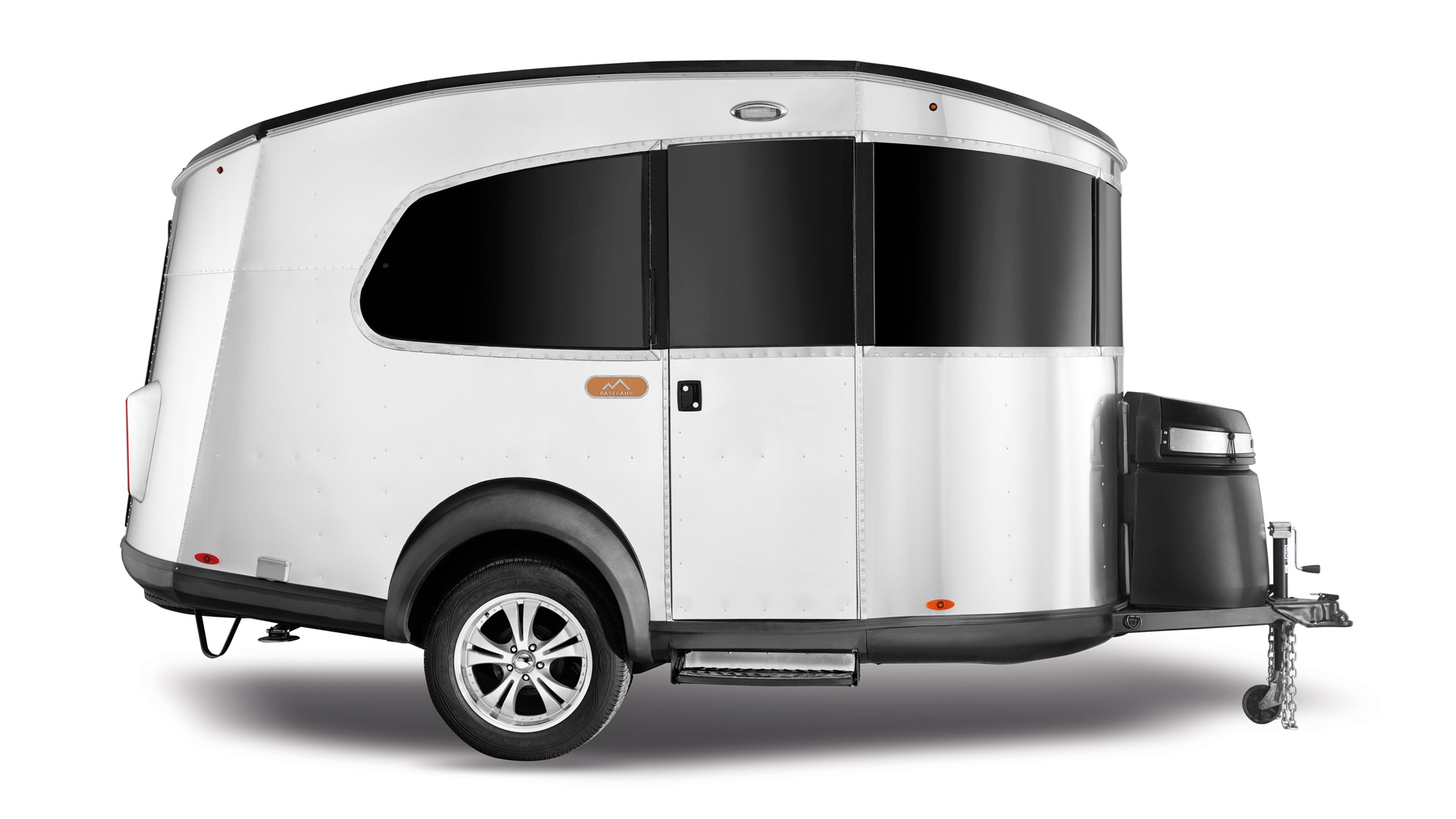 Photo unavailable
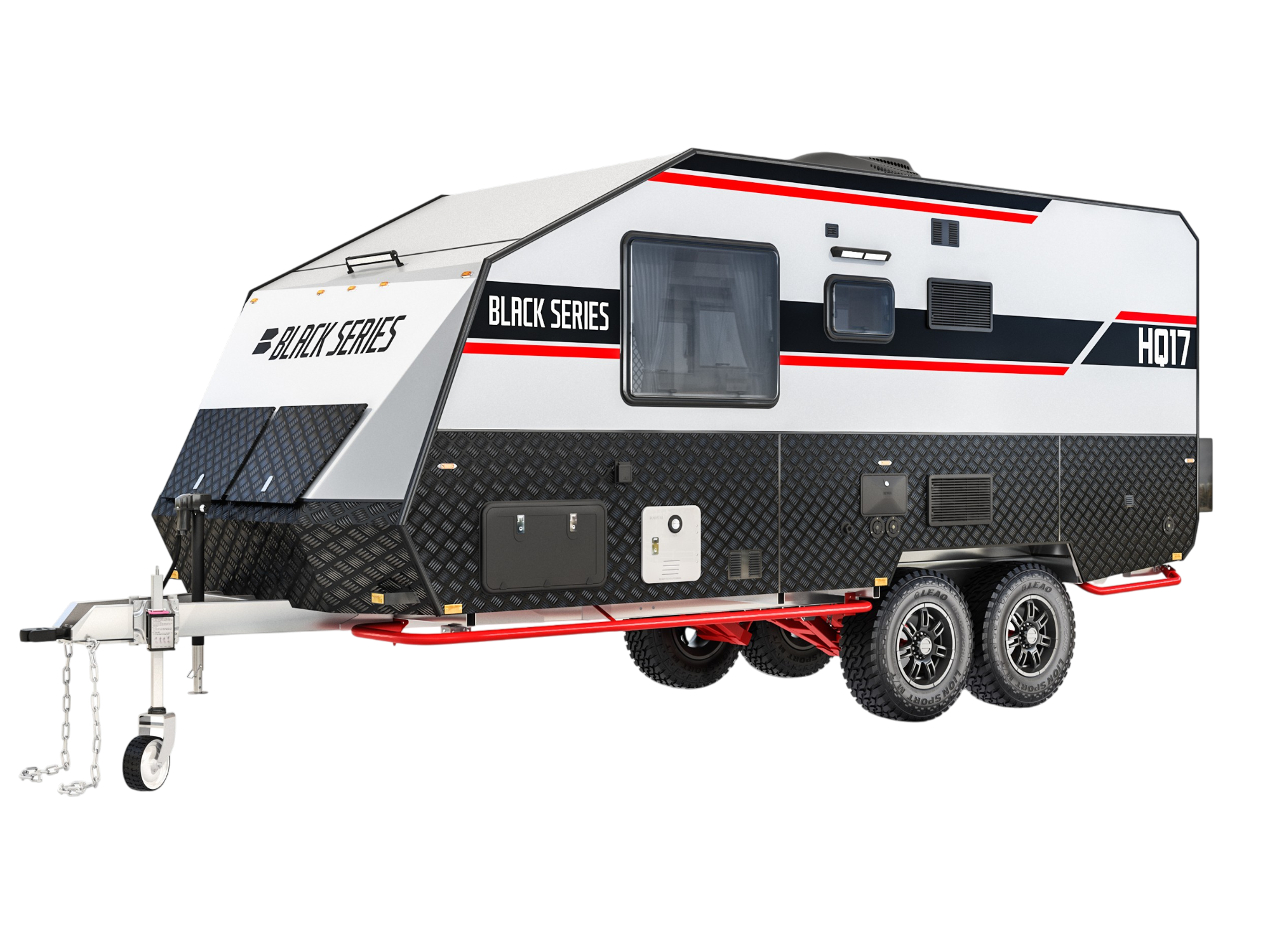 Photo unavailable
Quick verdict
Comparing the 2026 Airstream Basecamp 20X against the 2027 Black Series HQ17 puts two opposite philosophies side by side in the travel trailer class. The Basecamp 20X is listed at 3,400 lb dry and has an aluminum monocoque shell with Airstream’s lift-kit X-Package tires. The 2027 Black Series HQ17 is a 6,000-lb hot-dipped galvanized steel ground-up build with independent control-arm suspension, queen-plus-bunks layout, and a 400Ah lead-acid battery bank.
MSRP comes in nearly identical: $60,800 for the Basecamp 20X versus $59,899 for the HQ17 Base Model. What you get for the money differs sharply. The HQ17 brings 600W of roof solar, a 2,000W pure sine inverter, 63.4 gal of fresh water, a 13.5K BTU A/C, and a 16K BTU furnace as factory standard. The Basecamp 20X carries lithium with 200W solar and no inverter at base. The HQ17 climbs to $74,899 (Yellow Stone) and $89,899 (Rocky Mountain) if you want winch and roof rack upgrades.
Compare the listed layouts, equipment and capacities; these specifications do not establish towing compatibility or off-grid duration.
Side-by-side specs
| Airstream Basecamp 20X | Black Series HQ17 | |
|---|---|---|
| MSRP | $60,800 | $59,899 |
| Length | 20'2" | 24' |
| Dry weight | 3,400 lbs | 6,000 lbs |
| GVWR | 4,300 lbs | 7,000 lbs |
| Sleeps | 4 | 5 |
| Slides | 0 | 0 |
| Fresh tank | 23 gal | 63.4 gal |
| Grey tank | 28 gal | 26.42 gal |
| Black tank | 21 gal | 26.42 gal |
| LP | 9.4 gal | — |
| Solar | 200W | 600W |
| Inverter | — | 2000W |
| Generator | — | — |
| Bath | wet | wet bath |
| Bed | murphy | 1x queen bed plus 2x bunk beds plus convertible lounge |
| 4-season | No | Yes |
| Off-road | Yes | Yes |
| Outdoor kitchen | No | Yes |
| Washer/dryer | none | none |
| Residential fridge | No | No |
Where Airstream Basecamp 20X wins
- 2,600 lbs lighter dry weight (3,400 vs 6,000 lbs)
- Lithium battery chemistry vs HQ17's lead-acid bank
- Catalog entries do not establish resale performance.
- 4,300-lb GVWR listed; confirm vehicle compatibility using specific ratings and manufacturer guidance
- Compact 20.17 ft listed length; confirm driveway dimensions before purchase
Where Black Series HQ17 wins
- 400Ah of battery storage vs single unspecified lithium
- Catalog equipment entries do not verify installation, provenance or operation.
- Catalog equipment entries do not verify installation, provenance or operation.
- 63.4-gal fresh tank vs 23 gal (175% more capacity)
- Sleeps 5 with queen plus 2 bunks plus convertible lounge
- Catalog flags do not independently verify winter performance.
Pick the Airstream Basecamp 20X if…
Compare the listed floor plan, dimensions, tank capacities and equipment with your needs. For towing, verify your specific vehicle’s ratings and the trailer’s loaded weight, GVWR and hitch loads with the manufacturers; listed dry weight and vehicle class alone do not establish compatibility.
Pick the Black Series HQ17 if…
Compare the listed floor plan, dimensions, tank capacities and equipment with your needs. For towing, verify your specific vehicle’s ratings and the trailer’s loaded weight, GVWR and hitch loads with the manufacturers; listed dry weight and vehicle class alone do not establish compatibility.
Frequently asked
Is the 2027 Black Series HQ17 worth waiting for over the 2026 Airstream Basecamp 20X?
If you want true off-grid capability for a family, yes - the 2027 HQ17 brings 400Ah of battery, 600W solar, and a 2,000W inverter that the 2026 Basecamp 20X does not match. Catalog figures do not establish vehicle fit or towing suitability.
Which trailer has more fresh water capacity for boondocking?
The Black Series HQ17 holds 63.4 gallons of fresh water; the Airstream Basecamp 20X holds 23 gallons. That is 40.4 more gallons on the HQ17, the difference in tank capacity does not establish off-grid duration.
Can a half-ton truck tow both trailers safely?
Vehicle class alone cannot establish towing suitability. Check your specific vehicle’s rated towing capacity, payload, axle and hitch limits against the trailer’s loaded weight and GVWR, following both manufacturers’ guidance. Include passengers, cargo, fluids, options and hitch loads; listed dry weight is not loaded weight. This comparison is not a towing-compatibility recommendation.